
Coaching
Jacqueline, I would like to thank you for such structured sessions – I didn’t even realise I needed/wanted/would-benefit-from coaching until we started talking. It has been so very enjoyable and insightful working with you– Lucy Davies Head of Development Camphillmk
These sessions have helped my development and career progression, and resulted in promotion after 1 year of coaching – June Whitfield, Lucas Engineering
“I would like to thank Jacqueline for her expert mentoring and coaching, which I found instrumental in achieving promotion to Senior Lecturer and, approximately at the same time, securing Senior Fellowship of the Advanced HE (SFHEA).In my claim for SFHEA I was asked to demonstrate how my experience, achievements and skills aligned to the UK Professional Standard Framework (UKPSF) and the criteria for SFHEA, and to formalise a realistic looking forward plan aligned with my practice. Here too, Jacqueline helped me build a successful case through questioning and constructive feedback to successive iterations of my claim. At the same time, her questioning and guidance helped me reflect on what motivates me in my practice and I would like to develop my career in the future, thus also presenting a coherent and credible forward looking plan, as needed. “ Alessandro Saroli – Associate Professor in Management , The Open University UK
Training , development and course writing
Publications
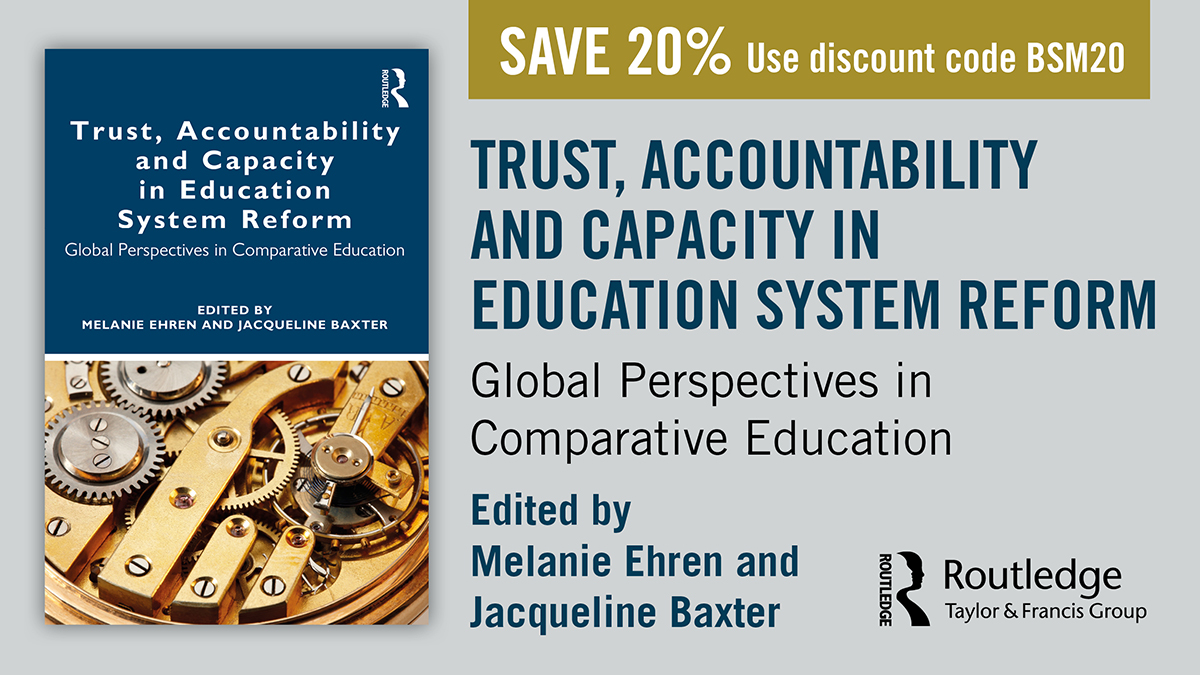
Changing school systems can be like moving graveyards: it is often hard to rely on the people out there to help, because the status quo has so many protectors. Meanwhile, the changes in our societies have vastly outpaced the structural capacity of our school systems to respond. Even the best education minister can no longer do justice to the needs of millions of students, hundreds of thousands of teachers and tens of thousands of schools. The challenge is to build on the expertise of teachers and school leaders and enlist them in the design of superior policies and practices. This is not accomplished just by letting a thousand flowers bloom; it requires a carefully crafted enabling environment around capacity, trust and accountability that can unleash teachers’ and schools’ ingenuity and build capacity for change.
Leaders who want to make forward-looking changes in their schools and school systems need to build a shared understanding and collective ownership, make the case for change, and offer support that will make change a reality. They need to focus resources, build capacity, change work organisations, and create the right policy climate with accountability measures designed to encourage innovation and development, rather than compliance. That relies on trust: trust in institutions, in educators and in students. Without trust, support for change is difficult to mobilise, particularly where short-term sacrifices are involved and long-term benefits not immediately evident. Low trust can also lead to lower rates of compliance, and in turn to more stringent and bureaucratic regulations or administrative accountability. In all public services, trust is an essential part of good governance. Successful schools will always be places where people want to work, and where their ideas can be best realised, where they are trusted and where they can put their trust.
We know still little about how trust is developed in education and sustained over time, or how it can be restored if broken. But trust cannot be legislated or mandated; that is why it is so hard to build into traditional administrative structures. Trust is always intentional; it can only be nurtured and inspired through healthy relationships and constructive transparency. At a time when command-and-control systems are weakening, building trust is essential to advance and fuel modern education systems.
Some people say one cannot give teachers and education leaders greater autonomy because they lack the capacity and expertise to deliver on it. There may be some truth in that. But simply perpetuating a prescriptive model of teaching will not produce creative teachers: those trained only to reheat pre-cooked hamburgers are unlikely to become master chefs. It is when teachers feel a sense of ownership over their classrooms and when students feel a sense of ownership over their learning that productive teaching takes place. That is the fundamental problem of systems where administrative accountability arrangements stifle autonomy, they do not generate and sustain capacity. So the answer is to strengthen trust, transparency, professional autonomy and the collaborative culture of the profession all at the same time.
Much has been written about trust, accountability and capacity in education. What Trust, Accountability, and Capacity in Education System Reform adds to the literature, beyond a comprehensive analysis of these concepts, is a systematic and insightful discussion of the interrelationships between these concepts. And it is the understanding of those interrelationships that will help policy-makers and practitioners address the some of the most persistent challenges in education: whether these concern the lack of professional agency of teachers, overburdening bureaucracy or the loss of legitimacy of public education.
by Andreas Schleicher, Director for the OECD’s Directorate of Education and Skills (including PISA) and Special Advisor on Education Policy to the OECD’s Secretary-General.
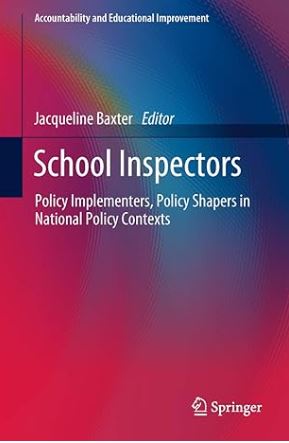
It seems a strange paradox that in this era of rolling back the state, school inspection has been revived, reinvented and rolled out by so many governments seeking to find new approaches to controlling schooling. Inspection has become a critical weapon in the armoury of ‘reforming’ states seeking to secure new means of control over public services in a period where conventional hierarchical/bureaucratic systems of government control have been dismantled. Inspection processes promise solutions to different policy problems of governing in these transitions. The offer a way of tracking policy implementation and performance ‘at a distance’; a process for scrutinising performance of semi-autonomous professionals; a means of installing and promoting a competitive ethos in education systems; and a legitimating independent and objective evaluative process in an era where publics have become increasingly sceptical about government claims. […..]
The variability of inspection might also be viewed in terms of the diversity of elements that have to be assembled in order to bring school inspection into being.[….] Inspection needs a particular type of people, : Are inspectors current teachers or school leaders […] are they formed in conventions other than pedagogy? Inspectors embody and enact the process of inspection-without them, there would only be data. National inspection systems vary in each of these elements and in how they are combined into an agency and a process that appears coherent. As this collection demonstrates, this attention to variation maters in several ways. It matters because school inspection has been deployed by governments for many different purposes. It matters because school inspection has occasionally become the focus of professional, personal and political controversy and it would be useful to know what aspects of inspection make it vulnerable to controversy. Finally, it matters because the temptation is to treat school inspection as a sort of ‘black box’ for school improvement-a governmental tool whose effects can be accessed or evaluated. But unless we open the black box and understand the complex assembly of elements that go into a particular version of school inspection, we cannot hope to understand any effects or why they might be different from those visible elsewhere. IN particular, the different arrangements of inspection and the different embodiments in types of inspector are critical to these ambitions of governing. This book takes an important step towards unlocking the black box and laying bare some of the mysteries of school inspection.
John Clarke ,Visiting Professor ,Department of Sociology and Social Anthropology , Central European University.
Emeritus Professor, The Open University UK.
 Professor Jacqueline Baxter EDd MA PGCE PFHEA CMBE Fellow of the Academy of Social Sciences