New Book

Navigating the Digital Transformation of Business and Law Education: Insights from “Creativity and Critique in Digital Learning and Teaching” (Baxter, Selby-Fell and Gilbert, 2025)

In the ever-evolving landscape of Higher Education, the turn towards digital learning has accelerated, challenging traditional pedagogies and inviting innovative approaches to teaching and learning. “Creativity and Critique: Digital Learning and Teaching: Insights for Learning Design in Business and Law,” edited by Jacqueline Baxter, Helen Selby-Fell and Andrew Gilbert, emerges as a seminal work at this critical juncture. This book, for release in May 2025 by Palgrave Macmillan, offers a comprehensive exploration of the shifts within business and law schools, catalysed by technological advancements and the unforeseen push online due to global challenges.

The book’s genesis is rooted in the recognition that digital learning, while not new, has encountered exponential growth, spurred by necessity during the pandemic. This forced migration online has underscored the importance of deliberate and thoughtful integration of digital tools in educational settings. However, it has also highlighted significant challenges, such as rushed digital adaptations without adequate support for staff, compromising the student learning journey, and issues of digital inclusion.

What sets this book apart is its forward-looking perspective, grounded in the scholarship of teaching and learning (SoTL). It not only addresses the immediate challenges faced by educators in adapting to digital mediums but also leverages the opportunities presented by technologies such as AI and platforms like ChatGPT. These tools, while transformative, present new pedagogical challenges that the authors tackle with depth and nuance.

Digital learning design in Business and Law

A unique selling point (USP) of the book is its dual focus on the fields of business and law (including policing), drawing parallels and distinctions between their pedagogical approaches in the digital realm. This interdisciplinary lens is invaluable, given the shared emphasis on work-based learning and the interdisciplinary nature of both fields. The editors and contributors, who hail from the Open University’s prestigious faculty of Business and Law, bring a wealth of experience and diverse perspectives to the discussion. Their backgrounds, ranging from legal education to supply chain management, enrich the book’s content, making it a multifaceted resource for educators, student services staff, and university management alike.

A standout feature is the book’s commitment to addressing equity in digital education. It tackles the pressing issue of digital poverty and explores strategies to ensure that all students, regardless of their backgrounds, have equitable access to learning opportunities. This focus is particularly pertinent in a world where access to technology can significantly influence educational outcomes.

“Creativity and Critique” excels in offering practical, evidence-based advice for navigating the complexities and conundrums of digital learning design. It draws on extensive research, case studies, and firsthand experiences from academics working in the fields of business, law and policing to present innovative learning designs and teaching strategies. This approach not only aids in addressing the pedagogical challenges of digital learning but also inspires educators to adopt creative solutions that enhance student engagement and success. As such, the volume is poised to be an essential guide for the future of digital learning. It skilfully navigates the intricacies of digital pedagogy, offering a beacon for educators striving to enhance their practices in the digital age.

For more information and to order your copy of the book, visit: Creativity and Critique in Digital Learning and Teaching: Insights for Learning Design in Business and Law | SpringerLink

Managing dominant team members in meetings

Managing Dominant Team Members in Meetings

We’ve all been in team meetings where no one can get a word in edgeways due to dominant members of the team occupying the air space ! So why do some people feel the need to dominate and what can you do to address this ?

Effective team meetings are critical for fostering collaboration, making decisions, and driving projects forward. However, managing dominant team members can be a challenge, as their assertiveness may inadvertently stifle input from others, skew decision-making, or lead to frustration among quieter team members. By implementing strategic approaches grounded in research and best practices, leaders can create a more balanced and inclusive meeting environment. So why do certain people manifest dominance in meetings ?

Understanding Dominance in Team Dynamics

Dominance in meetings often manifests as frequent interruptions, monopolization of speaking time, or steering discussions towards personal interests. While dominant members may bring valuable insights and energy, their behavior can unintentionally overshadow the contributions of others, potentially diminishing the overall effectiveness of the group (Kozlowski & Ilgen, 2006). Certain individuals may act dominant in meetings due to personality traits, such as high extraversion or assertiveness, or as a response to perceived threats to their status within the group. Additionally, dominance can arise from a desire to control outcomes or ensure their ideas are heard, particularly in high-stakes scenarios (Anderson & Brion, 2014; Wisse & Sleebos, 2016).

Strategies to Manage Dominant Participants

  1. Set Clear Expectations Begin meetings with a clear agenda and ground rules. Establishing norms such as “one person speaks at a time” and “every voice matters” creates a framework for respectful interaction (Lehmann-Willenbrock et al., 2011). Additionally, distributing the agenda beforehand allows all members to prepare their contributions, reducing the likelihood of any single person dominating.
  2. Facilitate Balanced Participation The role of the facilitator is critical in managing team dynamics. Techniques such as round-robin sharing or directed questions can ensure equal participation. For example, asking, “Let’s hear from someone who hasn’t spoken yet,” invites input from quieter members (Kerr & Tindale, 2004).
  3. Use Structured Techniques Structured decision-making tools, like brainstorming followed by prioritization or the Nominal Group Technique, (NGT ) can help balance participation. The NGT is a process by which individuals first generate ideas independently, followed by a group discussion to prioritize these ideas. This ensures that all contributions are considered before dominant voices can overly influence the discussion (Van Breda, 2019).These methods encourage individual input before group discussion, reducing the influence of dominant voices.
  4. Leverage Nonverbal Cues None verbal cues can be powerful in managing behaviours (ask any teacher !) . Facilitators can use nonverbal communication to subtly manage dominance. Making eye contact with quieter members, gesturing towards them to speak, or gently interrupting dominant participants with phrases like, “Let’s pause here to get others’ thoughts,” can help redistribute speaking time.
  5. Provide Feedback and Coaching Addressing dominant behavior privately can lead to positive changes. Frame feedback constructively, focusing on the impact of their behavior and suggesting alternative ways to contribute. For instance, say, “Your enthusiasm is valuable, but I’d like to ensure others have the opportunity to share their perspectives as well” (Hackman, 2002).
  6. Cultivate Psychological Safety Psychological safety—the belief that one can speak up without fear of negative consequences—is essential for inclusive meetings. Leaders should model vulnerability, acknowledge diverse viewpoints, and actively encourage participation from all members. (Allen et al, 2023)

Managing dominant team members requires a proactive and empathetic approach. By setting clear expectations, facilitating balanced participation, and fostering a culture of psychological safety, leaders can create a meeting environment where all voices are heard and valued. This not only enhances decision-making but also strengthens team cohesion and morale.

References

  • Anderson, C., & Brion, S. (2014). Perspectives on power in organizations. Annual Review of Organizational Psychology and Organizational Behavior, 1(1), 67-97.
  • Allen, J, A. Lehmann-Willenbrock, The Key Features of workplace meetings: Conceptualising the why, how and what of meetings at work, Organisational Psychology Review, London Sage.
  • Delbecq, A. L., Van de Ven, A. H., & Gustafson, D. H. (1975). Group techniques for program planning: A guide to nominal group and Delphi processes. Scott, Foresman.
  • Edmondson, A. (1999). Psychological safety and learning behavior in work teams. Administrative Science Quarterly, 44(2), 350-383.
  • Hackman, J. R. (2002). Leading teams: Setting the stage for great performances. Harvard Business Press.
  • Kerr, N. L., & Tindale, R. S. (2004). Group performance and decision making. Annual Review of Psychology, 55, 623-655.
  • Kozlowski, S. W., & Ilgen, D. R. (2006). Enhancing the effectiveness of work groups and teams. Psychological Science in the Public Interest, 7(3), 77-124.
  • Lehmann-Willenbrock, N., Meinecke, A. L., Rowold, J., & Kauffeld, S. (2011). How transformational leadership works during team interactions: Insights from a video-based field study. The Leadership Quarterly, 22(6), 1013-1024.
  • Wisse, B., & Sleebos, E. (2016). When the dark ones gain power: Perceived position power strengthens the effect of supervisor Machiavellianism on abusive supervision in work teams. Personality and Individual Differences, 99, 122-126.

Are we allowing our introverts to shine in interviews ?

Interviews are still a key element within recruitment processes, but approaches used in interviews, disadvantage many good candidates, including those that display more introverted behaviours. So what is introversion and why might this happen ?

Introversion: A Brief Description

Introversion is a personality trait characterized by a preference for solitary or minimally stimulating environments, with a tendency to focus on internal thoughts and emotions rather than external stimuli. Introverts often find social interactions draining and require time alone to recharge, unlike extroverts who apparently gain energy from socializing. This does not imply that introverts are antisocial; rather, they prefer meaningful, smaller-scale interactions to large groups or high-energy social settings (Baxter et al , 2024).

Psychological research suggests that introversion exists on a spectrum, often assessed using personality frameworks such as the Big Five, where it contrasts with extroversion (McCrae & Costa, 1987). Introverts are typically reflective, introspective, and attentive to details, which can make them adept at creative and analytical tasks (Laney, 2002). Biological factors may contribute to introversion, with studies indicating that introverts exhibit higher cortical arousal, influencing their preference for quieter environments (Eysenck, 1967). However, many people may self-identify as introverts, without ever having completed psychometric testing. In these cases, their introversion has emerged via socio cultural routes, coloured by the perceptions of others. These perceptions have, over time, influenced their self perceptions, concomitantly influencing the ways in which they interpret their own strengths and weaknesses (Baxter et al , 2024).

Cultural perceptions of introversion vary; some societies, particularly in the West, may undervalue introverted traits, favoring extroverted ideals. Yet, understanding introversion’s strengths can foster inclusivity and appreciation of diverse personality types.

Interviews and bias

Job interviews often favour extroverted candidates, unintentionally side-lining introverts due to the way they’re structured and evaluated. Many interview processes reward assertiveness, quick thinking, and overt enthusiasm—qualities typically associated with extroversion. Meanwhile, introverts, who may excel in preparation, thoughtfulness, and deep focus, can be perceived as less confident or engaged, even if they’re just being authentic ; this is what is termed, ‘an extroverted deficit belief.’ (Lawn et al, 2019).

Group interviews are particularly challenging for introverts, as such settings often reward candidates who dominate discussions or quickly respond, leaving introverts at a disadvantage as their neural pathways differ from those of extroverts- they are longer, meaning they take longer to process information (Cunningham et al, 2019 )Additionally, body language expectations like constant eye contact or overly animated gestures can feel unnatural for an introvert, leading interviewers to mistakenly perceive them as unengaged (Baxter et al, 2024).

Bias

Unconscious bias can also creep in. Many recruiters, often extroverts themselves, might unknowingly prefer candidates who mirror their own communication styles . This can overshadow the valuable strengths introverts bring, such as listening skills, analytical thinking, and a capacity for independent work (Dane et al, ).

To combat this bias, interviewers should focus on the substance of responses, allow adequate reflection time, and recognize the diverse ways candidates can demonstrate enthusiasm and competence. This may mean doing away with traditional mechanisms such as presentations or on the spot questions. Allowing advance preparation time can be key. In short, there are 10 key ways that recruiters can allow introverts to shine in interviews:

Ten Key Strategies to Help Introverts Shine in Interviews

  1. Provide Advance Notice
    Share the interview format and potential questions ahead of time. This allows introverts to prepare thoughtful and detailed responses.
  2. Encourage Preparation
    Remind candidates they can bring notes or examples of past achievements to reference during the conversation.
  3. Offer Reflection Time
    Avoid putting candidates on the spot with rapid-fire questions. Allow moments for them to think before answering.
  4. Focus on Depth, Not Just Speed
    Value the substance of answers over how quickly they’re delivered. Introverts often excel at giving well-considered responses.
  5. Adapt Interview Styles
    Use a one-on-one or small-panel format instead of group interviews, which can feel overwhelming for introverts.
  6. Create a Comfortable Environment
    Minimize unnecessary distractions or overly formal settings to help candidates feel at ease.
  7. Ask Open-Ended Questions
    Use questions that invite elaboration, such as “Can you share an example of…” to help introverts showcase their skills.
  8. Balance Verbal and Non-Verbal Cues
    Understand that introverts may not display high-energy body language but can convey enthusiasm in other ways, like precise language.
  9. Acknowledge Diverse Communication Styles
    Appreciate calm, measured responses and avoid interpreting them as disinterest.
  10. Provide Follow-Up Opportunities
    Offer a chance for candidates to share additional thoughts after the interview, which aligns with their reflective nature.

In failing to recognise introverted preferences and strong points, recruiters are failing to provide inclusive recruitment strategies. In the longer term this has a negative effect not only on candidates but in acquisition of talent more broadly.

Baxer, J., Patent, V., & Winter, A. (2024). Does Self-perceived introversion create a barrier to leadership emergence in Higher Education: a case study approach. In S.Huber (Ed.), The International Handbook for Governance, Leadership, Administration, and Management in Education Geneva: Palgrave.

Cunningham, G. B., & Ahn, N. Y. (2019). The role of bias in the under-representation of women in leadership po sitions Routledge Handbook of the Business of Women’s Sport (pp. 83-94): Routledge.

Dane, P. B., Madelynn, R. D. S., & Shelley, D. D. Righting the balance: Understanding introverts (and extraverts) in the workplace. International Journal of Management Reviews. doi: 10.1111/ijmr.12268

Lawn, R. B., Slemp, G. R., & Vella-Brodrick, D. A. (2019). Quiet flourishing: The authenticity and well-being of trait introverts living in the west depends on extraversion-deficit beliefs. Journal of Happiness Studies, 20(7), 2055-2075.

Rudolf, S., Cornelius, J. K., & Yannik, Z. Executive Search Consultants’ Biases Against Women (or Men?). Frontiers in psychology. doi: 10.3389/fpsyg.2020.541766

Resources and blog posts relating to introverted leadership and inclusive practices.

Management Today: https://www.managementtoday.co.uk/does-introvert-hamper-chances-making-senior-management/personal-development/article/1811100:Does being an introvert hamper your chances of making senior management?

Do the HEXACO TEST AT : https://hexaco.org/scaledescriptions

BBC Ideas : BBC Ideas Programme, Writer and voiceover, https://www.bbc.co.uk/ideas/videos/the-power-of-quiet-leadership/p0929tnh now with 168 thousand views.

Academic identities project resources

The Pitfalls of People-Pleasing in Female Leadership in the public and third sectors

Photo by Canva Studio on Pexels.com

In the realm of leadership, there’s a pervasive misconception that being agreeable and accommodating to everyone is a sure path to success. This tendency to prioritize others’ needs over one’s own, known as people-pleasing, is often glorified, especially when it comes to women in leadership roles. However, a deeper examination reveals that people-pleasing is fundamentally incompatible with effective leadership, particularly for women striving to break through the glass ceiling.

What is People-Pleasing?

People-pleasing is a behaviour characterized by an excessive need for approval and a fear of rejection or conflict. It involves prioritizing the desires and expectations of others over one’s own needs and desires. While it may seem like a harmless trait, especially in a society that values harmony and cooperation, it can have detrimental effects, particularly in leadership positions. In many ways it is written in our DNA: In anthropological terms, it was necessary for women to be useful to a tribe in a way that men were not, so people pleasing was a sure fire way to keep in with the tribe !

Both people-pleasing and perfectionism stem from a fear of inadequacy and rejection, perpetuating a cycle of striving for acceptance through constant achievement and perfection. This leads to a never-ending pursuit where no amount of effort seems enough. The focus on pleasing others creates a divide between one’s true self and the persona presented to the world, resulting in a loss of authenticity and self-awareness. The approval gained from pleasing others fails to alleviate internal doubts and anxieties, as it is based on a false representation. Consequently, individuals lose touch with their genuine preferences, beliefs, and values, as they prioritize meeting external expectations. People-pleasing and perfectionism act as shields, obscuring the true self and hindering personal growth and fulfillment. Breaking free from these patterns requires embracing authenticity and prioritizing self-awareness over external validation.

In the context of female leadership, the pressure to be likable and accommodating is often magnified. Women in leadership roles are frequently expected to navigate a delicate balance between assertiveness and nurturing, all while contending with societal stereotypes and biases. As a result, many women succumb to the temptation to prioritize harmony over confrontation, leading them down the slippery slope of people-pleasing.

Why People-Pleasing is Incompatible with Good Leadership

At first glance, people-pleasing may appear to foster positive relationships and teamwork. However, beneath the surface lies a host of problems that can undermine effective leadership for example:

  • Loss of Authenticity: Constantly seeking approval from others can erode a leader’s sense of self and authenticity. By prioritizing others’ expectations over their own values and principles, leaders risk losing sight of who they truly are and what they stand for.
  • Inability to Make Tough Decisions: Effective leadership often requires making difficult decisions that may not be popular with everyone. People-pleasers, fearing backlash or disapproval, may shy away from making these tough calls, leading to indecision and stagnation within the organization.
  • Undermined Authority: Leaders who constantly seek validation from their team members may struggle to command respect and authority. Employees may perceive them as weak or indecisive, undermining their ability to lead effectively.
  • Stifled Innovation: Innovation thrives in environments where diverse perspectives are encouraged and dissenting opinions are welcomed. However, a culture of people-pleasing stifles creativity and innovation by discouraging constructive criticism and honest feedback.
  • Burnout and Resentment: Being a female leader and a people-pleaser can have significant consequences for wellbeing. Constantly striving to meet others’ expectations while neglecting one’s own needs can lead to heightened stress, anxiety, and burnout. Female leaders may find themselves caught in a cycle of overwork as they attempt to juggle the demands of leadership with the desire to please everyone. This relentless pursuit of approval can take a toll on both mental and physical health, leading to exhaustion, sleep disturbances, and decreased resilience. Moreover, the pressure to maintain a façade of perfection can exacerbate feelings of impostor syndrome and undermine self-confidence. Additionally, the internal conflict between authenticity and conformity can create a sense of dissonance, leaving female leaders feeling disconnected from their true selves. This lack of alignment with one’s values and beliefs can erode self-esteem and contribute to feelings of emptiness or dissatisfaction. In the long term, the negative impact on wellbeing can extend beyond the individual to affect relationships, job performance, and overall quality of life. It’s essential for female leaders to prioritize self-care, set boundaries, and seek support to mitigate the harmful effects of people-pleasing on their wellbeing.

Moving Towards Authentic Leadership

Authentic leadership for women involves aligning actions with personal values, fostering genuine connections, and embracing vulnerability (Northouse, 2015). It emphasizes transparency, self-awareness, and integrity, allowing female leaders to inspire trust and loyalty (Avolio & Gardner, 2005). By embracing authenticity, women leaders cultivate a supportive and inclusive work culture, where individuals feel empowered to express themselves and contribute fully (Gardner et al., 2011). This approach fosters collaboration, innovation, and employee engagement, leading to improved organizational performance and greater job satisfaction (Walumbwa et al., 2008). Ultimately, authentic leadership enables women to lead with confidence and make a meaningful impact on their teams and organizations.

Breaking free from the people-pleasing trap requires a conscious effort to cultivate authenticity, assertiveness, and self-confidence. Female leaders, in particular, must challenge societal norms and stereotypes, embracing their unique strengths and leadership styles. By prioritizing open communication, fostering a culture of accountability, and leading by example, women can redefine leadership on their own terms.

So… while the temptation to people-please may be strong, particularly for women in leadership roles, it ultimately undermines the very essence of effective leadership. By embracing authenticity, assertiveness, and self-confidence, female leaders can chart a new course towards more inclusive, innovative, and sustainable leadership practices.

10 Ways to Stop being a people pleasing leader

  1. Set Boundaries: Clearly define your limits and communicate them assertively to your team. Be firm in saying no to requests or tasks that don’t align with your priorities or values.
  • Practice Self-Reflection: Take time to reflect on your motivations and behaviors. Identify instances where you’ve prioritized others’ needs over your own and explore alternative responses.
  • Develop Assertiveness Skills: Learn to express your thoughts, opinions, and needs confidently and respectfully. Practice assertive communication techniques to assert your boundaries and preferences without being overly aggressive or passive.
  • Delegate Responsibility: Trust your team members to take on tasks and make decisions independently. Delegating responsibilities not only empowers your team but also frees up time for you to focus on strategic priorities.
  • Focus on Impact: Shift your focus from seeking approval to making a positive impact. Prioritize actions and decisions based on their potential to benefit the organization and stakeholders rather than solely seeking validation.
  • Embrace Constructive Feedback: Welcome feedback from others, even if it’s critical. Use feedback as an opportunity for growth and learning rather than taking it personally or feeling the need to defend yourself.
  • Practice Self-Care: Prioritize your well-being by taking care of your physical, mental, and emotional health. Schedule regular breaks, engage in activities you enjoy, and seek support from friends, family, or a mentor.
  • Cultivate Authentic Relationships: Foster genuine connections with your team based on trust, respect, and mutual understanding. Authentic relationships encourage open communication and collaboration, reducing the need for people-pleasing behaviors.
  • Stay True to Your Values: Align your actions with your core values and principles. Make decisions that reflect your beliefs, even if they may not be popular or well-received by everyone.

Seek Professional Development: Invest in leadership development programs or coaching to enhance your leadership skills and confidence. Surround yourself with supportive peers and mentors who can provide guidance and encouragement as you navigate away from people-pleasing tendencies

References:

Abrams, D., & Hogg, M. A. (2010). Social Identity Theory: Constructive and Critical Advances. Springer Science & Business Media.

Eagly, A. H., & Carli, L. L. (2007). Women and the labyrinth of leadership. Harvard Business Review, 85(9), 62-71.

Glick, P., & Fiske, S. T. (1996). The ambivalent sexism inventory: Differentiating hostile and benevolent sexism. Journal of Personality and Social Psychology, 70(3), 491.

Morin, A. (2015). 13 Things Mentally Strong People Don’t Do: Take Back Your Power, Embrace Change, Face Your Fears, and Train Your Brain for Happiness and Success. William Morrow Paperbacks

    Why keep a dog and bark yourself ? The pitfalls of Micromanagement: Unraveling Causes, Consequences, and Employee Countermeasures

    Micromanagement, leadership approach characterized by excessive control and supervision, has long been a subject of concern in organizations worldwide. This article delves into the reasons behind leaders’ inclination to micromanage, the detrimental effects it has on both employees and the work environment, and provides some steps employees can take to address the issue.

     The 5 Key reasons why Leaders micromanage:

    • Trust and Control: Some leaders may struggle with trust issues or fear of failure, leading them to micromanage as a means of maintaining control over outcomes.
    • Perfectionism: A desire for perfection and attention to detail can push leaders to micromanage, believing that their input is crucial for achieving flawless results.
    • Lack of Confidence: Insecure leaders may feel the need to be involved in every decision and task, fearing that relinquishing control could expose their weaknesses.
    • Communication Gaps: Insufficient clarity or lack of effective communication within teams can drive leaders to micromanage to ensure tasks are executed as intended.
    • Personal Attachment: Leaders who have poured substantial effort into a project or task may find it difficult to delegate, resulting in micromanagement tendencies.

    The Consequences of Micromanagement:

    The consequences of micromanagement can be severe: employee demoralization-when constant monitoring and interference erodes employees’ motivation, job satisfaction, and self-confidence. This leads them to feel undervalued, leading to stress and burnout; Stifled creativity and innovation-micromanagement-this restricts staff autonomy and stifles their ability to think creatively or explore alternative solutions, hampering innovation within the organization, hindering growth and skill development: Lack of ownership -employees are deprived of the opportunity to take ownership of their work and develop new skills, hampering professional growth and limiting their potential; Reduced productivity- micromanagement consumes significant time and energy, diverting focus away from critical tasks, and employees become disengaged, leading to decreased productivity and compromised organizational performance: High turnover and talent loss-the negative impact of micromanagement often drives talented employees to seek more empowering work environments, leading to increased turnover rates and the loss of valuable human capital.

    What can you do if you are being micromanaged ?

    There are 5 key actions you can take if you are being micromanaged:

    1. Engage in open dialogue with the micromanaging leader, expressing concerns and requesting more autonomy and trust. Constructive feedback can help raise awareness about the impact of their behaviour.
    2. Establish Boundaries: Clearly define roles, responsibilities, and expectations. Proactively communicate progress, plans, and milestones to ensure transparency and minimize micromanagement tendencies.
    3. Demonstrate Competence: Prove your capabilities and competence through high-quality work, meeting deadlines, and taking ownership of assigned tasks. Building trust and confidence can gradually reduce the need for micromanagement.
    4. Seek Feedback: Actively seek feedback and guidance from the micromanaging leader. By demonstrating a commitment to learning and improvement, you can foster a collaborative environment and potentially mitigate micromanagement.
    5. Suggest Alternatives: Propose alternative approaches to demonstrate your ability to think critically and provide valuable insights. This can help shift the focus from constant monitoring to shared decision-making

    Micromanagement can have far-reaching consequences for both employees and organizations and understanding the underlying causes of micromanagement is crucial for employees to navigate and address this issue effectively. By fostering open communication, setting boundaries, and showcasing competence, you can strive to reduce micromanagement tendencies, foster a healthier work environment, and unleash you full potential.

    Allan, J., & Rogelberg, S. (2017). Encyclopedia of Industrial and Organizational Psychology. SAGE Publications.

    Erkutlu, H., & Chafra, J. (2018). A Comprehensive Literature Review of Micro-Managers and Micromanagement. Journal of Applied Management and Entrepreneurship, 23(1), 62-75.

    Kaur, R., & Mathur, A. (2017). Effects of Micromanagement on Employee Engagement: The Mediating Role of Psychological Ownership. Indian Journal of Industrial Relations, 52(2), 219-232.

    Rigby, D. K., & Bilodeau, B. (2018). Avoiding the Traps of Micromanagement. Harvard Business Review. Retrieved from https://hbr.org/2018/01/avoiding-the-traps-of-micromanagement

    The role of SoTL in developing practitioner /academic identities

    This blog was first published on the HEA website at : HEA Blog: The role of scholarship of teaching and learning in developing practitioner /academic identities

    All faculties employ individuals who have made the move from practitioner, to academic: Whether teacher, business leader, lawyer, social worker or nurse, very often these individuals have attained seniority in their professional lives. Yet the literature on this transition illustrates that it is rarely straightforward. The move has implications for values and purpose whilst prior assumptions on academia can create a great deal of cognitive dissonance for the individual.

    Pedagogical research or the Scholarship of Teaching and Learning (SoTL) is now a feature of the higher educational landscape, brought about in no small measure by policies that place a premium on evidence-based practice and knowledge exchange. Having employed SoTL as a mechanism to craft my own professional identity I discuss how SoTL can aid  practitioner/academic transition, helping individuals make sense of their work and feel part of valued communities of practice.  

    Hankering for the past when the present doesn’t satisfy

    Concepts and beliefs about professional identity are wide ranging – from the arguments that identities are relatively fixed, to those that regard them as work in progress, malleable and adaptive. My own work over the past 15 years on this adopts the narrative perspective,(Connelly, 1990) in which individuals make sense of their environment by carrying out identity work and creating and re-creating a rhetorical history that suits their purpose (Suddaby et al., 2016; Taylor, 2005). This approach also considers the field of organisational identity creation and the ways that individuals establish credibility within a field or role (Baxter, 2010, 2011; Baxter, 2012; Baxter, 2013).

    Transitions in HE are further complicated, due to the fact that there are so many ways to become and be, an academic – many practitioners even chafing at the term ‘academic’ as being a role that is divorced from the ‘real world’. In addition, we all enter HE complete with assumptions about what it means to be an academic. Once in post the challenges are myriad, ranging from the adaptation of value systems and norms (rarely explicit) to different status, authority, and accountability to that experienced in former roles. Bruce Macfarlane’s recent paper, offers a tongue in cheek account of some of the drivers and beliefs underpinning academic identities (Macfarlane, 2022). His diagram (figure 1 page, ), illustrates islands of practice on which the academic may find themselves, and the numerous different priorities and beliefs that drive and shape this nebulous role.

    The cost of identity failure

    The cost of not being able to find a way to ‘be’ in HE is high, and can result in lack of team spirit, mental illness, and finally attrition, as individuals return to former comfort zones in order to retain their equilibrium and sense of ‘self’, and autonomy (Chen et al., 2022). This autonomy, or lack of agency is characterised by low motivation, and can easily overlap into an individual’s personal life and worldview. As Boyd and Harris put it, ‘new lecturers are seeking credibility through knowing and constructing their pedagogy, but they pursue this within a complex and confusing context that involves a considerable amount of boundary crossing and uncertainty’. So how can SoTL help with this identity work ?

    Scholarship of Teaching and Learning (SoTL)

    Individuals crossing over from any field, to academia often report they find it easier to create identities in relation to teaching and interface with students, this is particularly so for those on teaching contracts only who may come into academia without doctorates or much experience of research (Handley, 2005) Even if they have no research within their contracts, their natural curiosity can drive them to carry out SoTL research. So what can this offer them in relation to their professional , academic identities ?

    SoTL explorations can range from investigations based on a ‘what works’ approach, straddling quality assurance/research,  to theoretically robust scholarship which draws on theories and concepts of learning and engagement. For teachers, this allows them to investigate their own practices and concomitantly themselves, by exploring their area of interest in relation to other practices, other research accounts, other pedagogies and fields of thought.

    Crafting and creating academic credibility

    Teaching is a rewarding but sometimes frustrating occupation and despite our best efforts, students can and do disengage. Carrying out SoTL permits individuals to become more empowered by their research, engaging with others and creating narratives inherent within professional interest communities (Brown, 2006). This not only has the power to make them feel part of communities of practice, but moves them from the periphery to centrality, within these communities, a move known to contribute to both professional agency and expertise (Lave et al., 1991).

    Sadly, in many HEIs this research is often thought of as somehow not as powerful or transformative as traditional research. In my view, institutions need to think more creatively about this research and how to incorporate it within their practice, or risk lack of professional job satisfaction and attrition amongst ex practitioners. In addition, in light of the recent policy agenda on impact, engagement and knowledge exchange, failure to do so threatens not only the academic community within the organisation, but the very organisation itself.  

    References:

    Baxter, J. (2011). Public Sector Professional identities: etiolation or evolution; a review of the literature. . from http://oro.open.ac.uk/29793/

    Baxter, J. (2012). The impact of professional learning on the online teaching identities of higher education lecturers:the role of resistance discourse European Journal of Open,Distance and E-Learning, 1(2).

    Baxter, J. (2013). Professional inspector or inspecting professional? Teachers as inspectors in the new regulatory regime in England Cambridge Review of Education, 43(4), 467-487.

    Brown, A. D. (2006). A narrative approach to collective identities. Journal of Management Studies, 43(4), 731-753.

    Chen, Y., Currie, G., & McGivern, G. (2022). The role of professional identity in HRM implementation: Evidence from a case study of job redesign. Human Resource Management Journal, 32(2), 283-298.

    Connelly, M. a. C., J. (1990). Stories of Experience and Narrative Inquiry. Educational Researcher, 19(5 (Jun-Jul 1990)), 2-14.

    Handley, D. M. (2005). The Best of Both Worlds: A Former Practitioner Transitions to Life as a Full‐Time Academic. Public Administration Review, 65(5), 624-627.

    Lave, J., & Wenger, E. (1991). Situated learning: Legitimate peripheral participation: Cambridge university press.

    Macfarlane, B. (2022). A voyage around the ideological islands of higher education research. Higher Education Research & Development, 41(1), 107-115.

    Suddaby, R., Foster, W. M., & Trank, C. Q. (2016). Re-Membering. The Oxford handbook of organizational identity, 297.

    Taylor, S. (2005). Self-narration as rehearsal: A discursive approach to the narrative formation of identity. Narrative Inquiry, 15(1), 45-50.

    Education Journals for buisness

    •Journal of Business education

    •Journal of International Education in Business

    •Journal of Management and Business Education

    •Journal for advancing business education

    •Journal of financial education

    •Entrepreneurship education

    •Journal of Entrepreneurship education

    •Journal of Marketing Education

    •Marketing Education Review

    •Journal of HR Education

    •Management in Education

    •BERJ

    •BERA (association with its own journals )

    •IRODL

    •Journal of education and work

    •Journal of International Education in business

    •Journal of studies in international education

    •Journal of education Policy

    •Innovations in Education and Teaching International

    •Higher Education Quarterly

    •Education Economics

    •Teaching in Higher Education

    The internet and Higher Education

    Management in Education

    British Educational Research Journal

    Digital strategy in secondary education: going forward or moving backwards ?

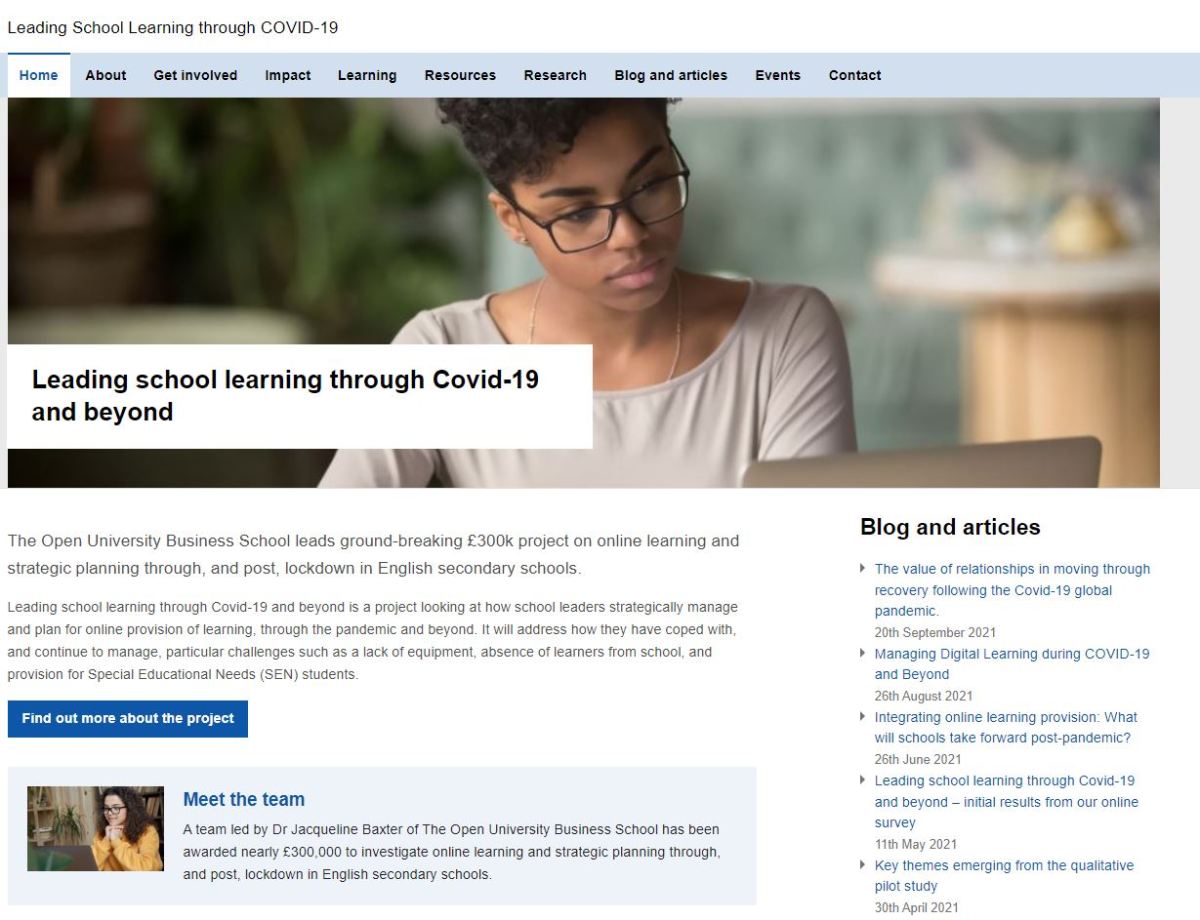
    Following lockdowns in 2020 due to Covid-19, schools needed to find a way to ensure the education of their pupils. In order to do this, they engaged in digital learning, to varying extents. Innovations emanated from all school staff including for example: teachers, leaders,  and teaching assistants. Some were already innovating in this area and brought forward and implemented, digital strategies, whilst others engaged with digital learning for the first time. While research is emerging about the effects of the pandemic restrictions on pupils and staff in relation to key issues such as mental health and educational attainment, very little is known about the impact on school leaders’ strategic planning processes. To address this gap, we launched a UKRI funded study adopting a strategy as learning approach to report on 50 qualitative interviews with school leaders to examine digital strategy in English secondary schools, before, during. and after July 2021, when restrictions were lifted in England. The project draws on  strategy as learning literature to evaluate if schools have changed their strategic planning for digital learning, as a direct response to having learned and innovated during the pandemic. The study concludes that there is evidence that digital innovations during the pandemic have changed the ways in which leaders think about their digital strategy, thus supporting a strategy as learning approach. However it also concludes that although there is ample evidence that the pandemic has changed the way many schools view digital learning, that, for some schools, there remain persistent barriers to digital integration and planning. These emanate both from material and cultural considerations, as well as leader vision and belief in digital learning.

    You can find out more on the project website at: https://www.open.ac.uk/projects/leading-online-learning/

    Publishing in journals : Guidance from Keynote: The University of Birmingham Business School 080922.

    Introduction

    Submitting to an education journal for the first time is a nervewracking business. Here are a few guidelines that you can use as a checklist before submitting. It is also always a good idea to get a colleague or supervisor to look over your paper. Better to correct early than to get rejected and have to start all over again ………..

    Reviewer Evaluation Criteria and author checklist Developed by Professor Jacqueline Baxter Copyright J.A.Baxter 2018.

    This checklist is not exhaustive, but rather intended to provide a set of guidelines for those submitting to a journal for the first time.

    Abstract  

    • Does the abstract sufficiently summarize the manuscript under review
    • Is the abstract within word count

    Identification of Premise and Demonstration of Need

    Does the article:

    • sufficiently identify the premise of the article.
    • Offer a clear rationale for the work within the field?
    • Use appropriate literature to identify the premise or demonstrate the need for the research?
    • Justify interest to international readership?

    Literature

    Does the article:

    • Link to current literature within the target journal and outside of it ?
    • Reflect engagement and understanding of relevant lit ??
    • Overlook any core literature in the field, for example Weick in the case of sensemaking ?
    • Overlook recent lit that may be useful ? (Last min scan is always useful)

    Appropriateness of Methodology

    Do the methods:

    • Link to the theoretical underpinning and lit review ?
    • Reflect reliable, valid and ethically sound data collection methods ?

    Application of Analysis

    Does the article:

    • Clearly articulate the processes of data collection and analysis
    • Provide a clear description of the results? 
    • Do the results described in the manuscript respond to the research questions ?

    Robust Discussion

    Does the article:

    Provide a thorough and measured discussion of the findings and connect this to the theoretical framework ?

    • Identify any implications for theory, practice and or further research?
    • Are the implications consistent with the discussion, findings, and conclusions of the paper?

    Writing Mechanics

    Is the article:

    • Written for an international audience?
    • Free of grammatical errors?
    • Express its case, measured against the technical language of the field of study and the expected knowledge of the journal’s readership?
    • Fall within word count ?
    • Does the author follow the referencing guidelines?