
Navigating the Digital Transformation of Business and Law Education: Insights from “Creativity and Critique in Digital Learning and Teaching” (Baxter, Selby-Fell and Gilbert, 2025)

In the ever-evolving landscape of Higher Education, the turn towards digital learning has accelerated, challenging traditional pedagogies and inviting innovative approaches to teaching and learning. “Creativity and Critique: Digital Learning and Teaching: Insights for Learning Design in Business and Law,” edited by Jacqueline Baxter, Helen Selby-Fell and Andrew Gilbert, emerges as a seminal work at this critical juncture. This book, for release in May 2025 by Palgrave Macmillan, offers a comprehensive exploration of the shifts within business and law schools, catalysed by technological advancements and the unforeseen push online due to global challenges.
The book’s genesis is rooted in the recognition that digital learning, while not new, has encountered exponential growth, spurred by necessity during the pandemic. This forced migration online has underscored the importance of deliberate and thoughtful integration of digital tools in educational settings. However, it has also highlighted significant challenges, such as rushed digital adaptations without adequate support for staff, compromising the student learning journey, and issues of digital inclusion.
What sets this book apart is its forward-looking perspective, grounded in the scholarship of teaching and learning (SoTL). It not only addresses the immediate challenges faced by educators in adapting to digital mediums but also leverages the opportunities presented by technologies such as AI and platforms like ChatGPT. These tools, while transformative, present new pedagogical challenges that the authors tackle with depth and nuance.
Digital learning design in Business and Law
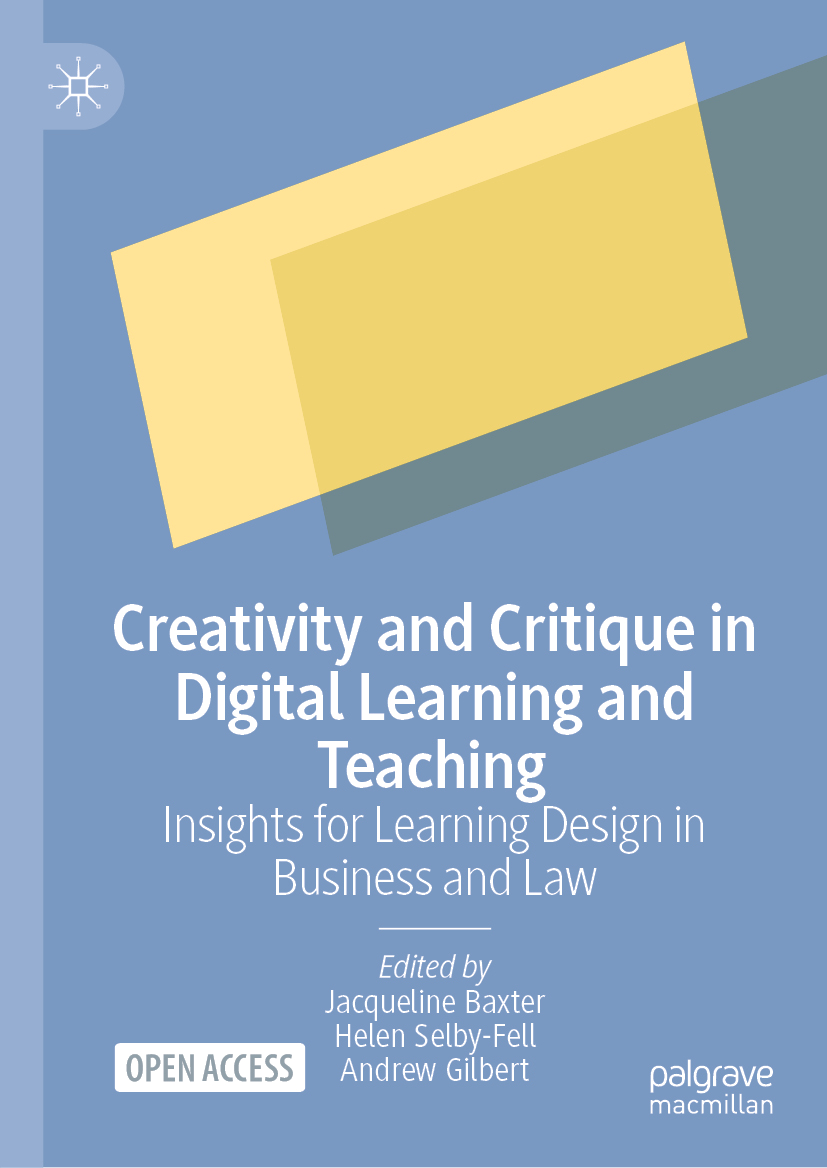
A unique selling point (USP) of the book is its dual focus on the fields of business and law (including policing), drawing parallels and distinctions between their pedagogical approaches in the digital realm. This interdisciplinary lens is invaluable, given the shared emphasis on work-based learning and the interdisciplinary nature of both fields. The editors and contributors, who hail from the Open University’s prestigious faculty of Business and Law, bring a wealth of experience and diverse perspectives to the discussion. Their backgrounds, ranging from legal education to supply chain management, enrich the book’s content, making it a multifaceted resource for educators, student services staff, and university management alike.
A standout feature is the book’s commitment to addressing equity in digital education. It tackles the pressing issue of digital poverty and explores strategies to ensure that all students, regardless of their backgrounds, have equitable access to learning opportunities. This focus is particularly pertinent in a world where access to technology can significantly influence educational outcomes.
“Creativity and Critique” excels in offering practical, evidence-based advice for navigating the complexities and conundrums of digital learning design. It draws on extensive research, case studies, and firsthand experiences from academics working in the fields of business, law and policing to present innovative learning designs and teaching strategies. This approach not only aids in addressing the pedagogical challenges of digital learning but also inspires educators to adopt creative solutions that enhance student engagement and success. As such, the volume is poised to be an essential guide for the future of digital learning. It skilfully navigates the intricacies of digital pedagogy, offering a beacon for educators striving to enhance their practices in the digital age.
For more information and to order your copy of the book, visit: Creativity and Critique in Digital Learning and Teaching: Insights for Learning Design in Business and Law | SpringerLink

 Professor Jacqueline Baxter EDd MA PGCE PFHEA CMBE Fellow of the Academy of Social Sciences